Scope that matches your kitchen layout
Cook lines, prep zones, and storage areas all soil differently. We define exactly which equipment and surrounding areas are included so you can plan around service.
Serving Cincinnati, Ohio & surrounding areas
Mon–Fri 8am–6pm · Sat 9am–2pm
Degrease, detail-clean, and sanitize high-use back-of-house equipment so your kitchen runs cleaner, safer, and more predictably during service.
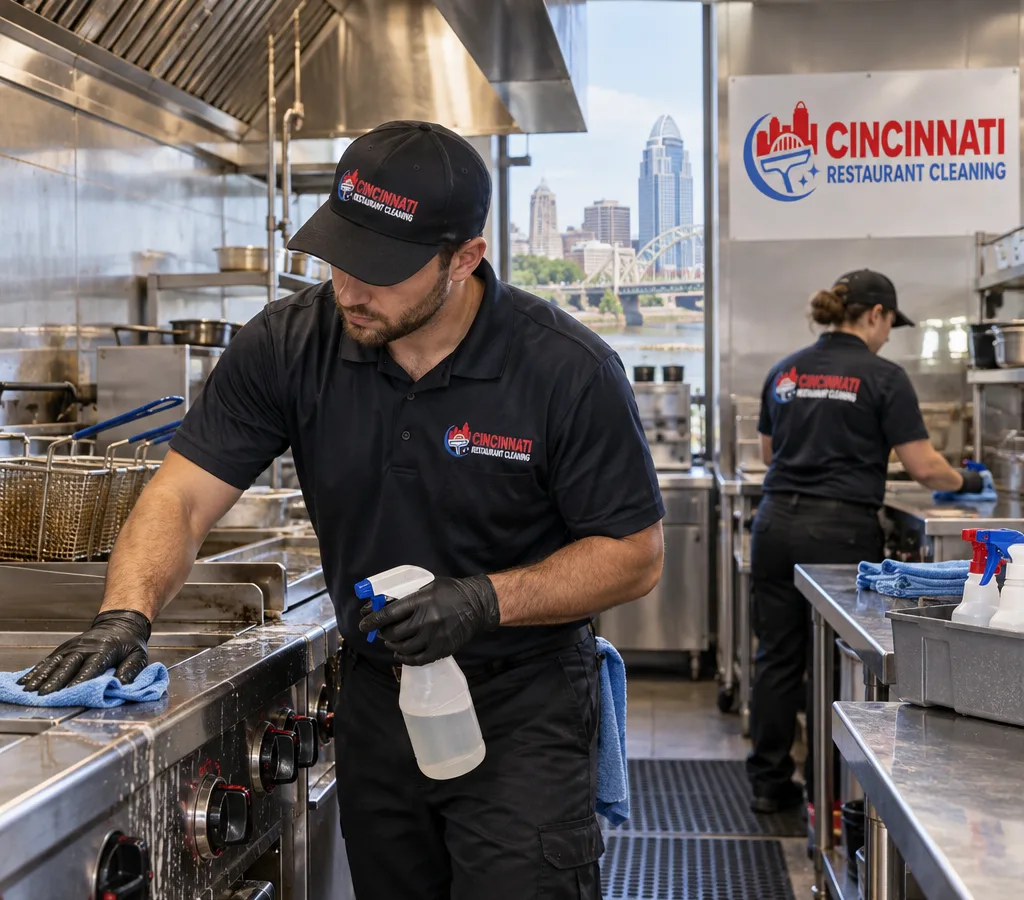
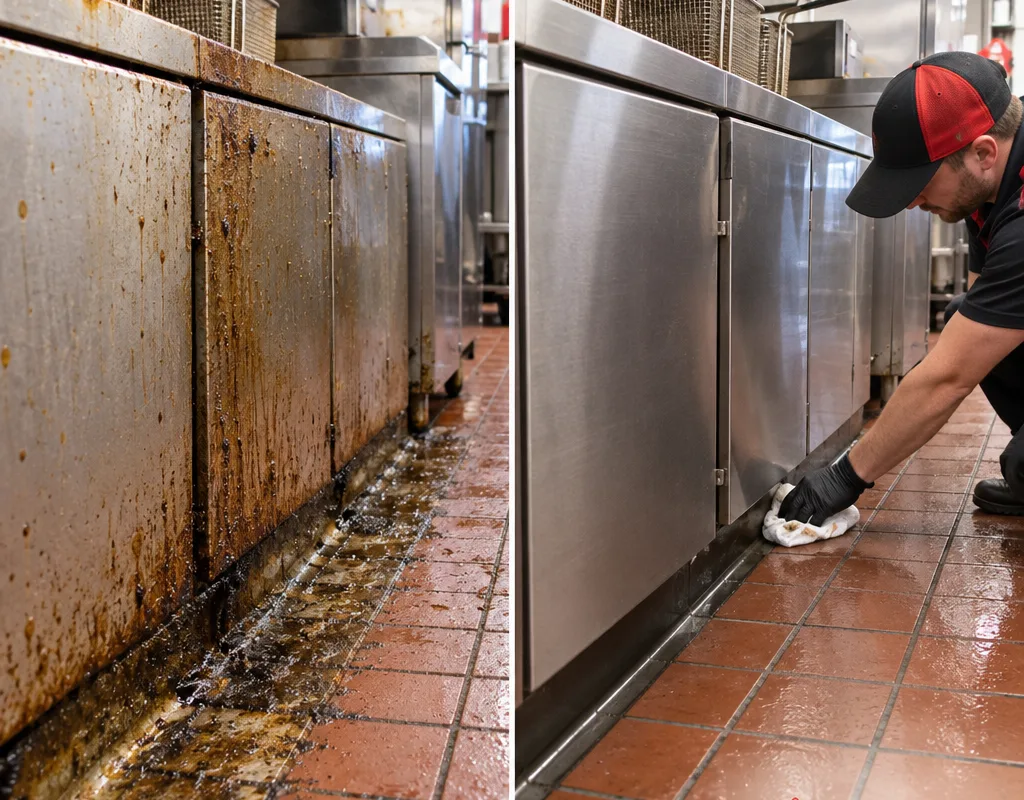
Restaurant Equipment Cleaning Newport focuses on the hard-working areas that collect grease, carbon, and food soil where daily wipe-downs do not reach. In busy kitchens across Northern Kentucky and the Cincinnati metro, buildup happens fastest on cook lines, around fryer batteries, under equipment skirts, behind refrigeration, and on prep surfaces that see constant contact.
A thorough equipment clean supports food safety and day-to-day operations in practical ways: less grime transfer during prep, fewer odors, fewer slip hazards from grease migration, and equipment that is easier to maintain. It also helps during routine health inspections because the details inspectors look for are usually the hidden or neglected zones, such as underside lips, gaskets, handles, edges, legs and casters, and the floor area directly under hot equipment.
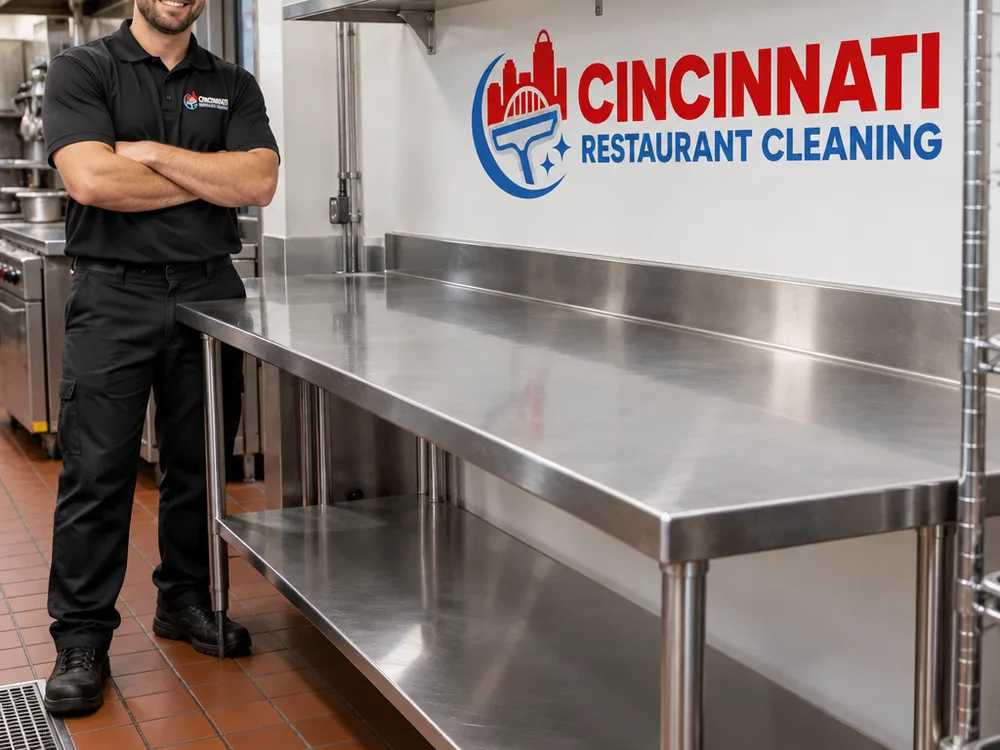
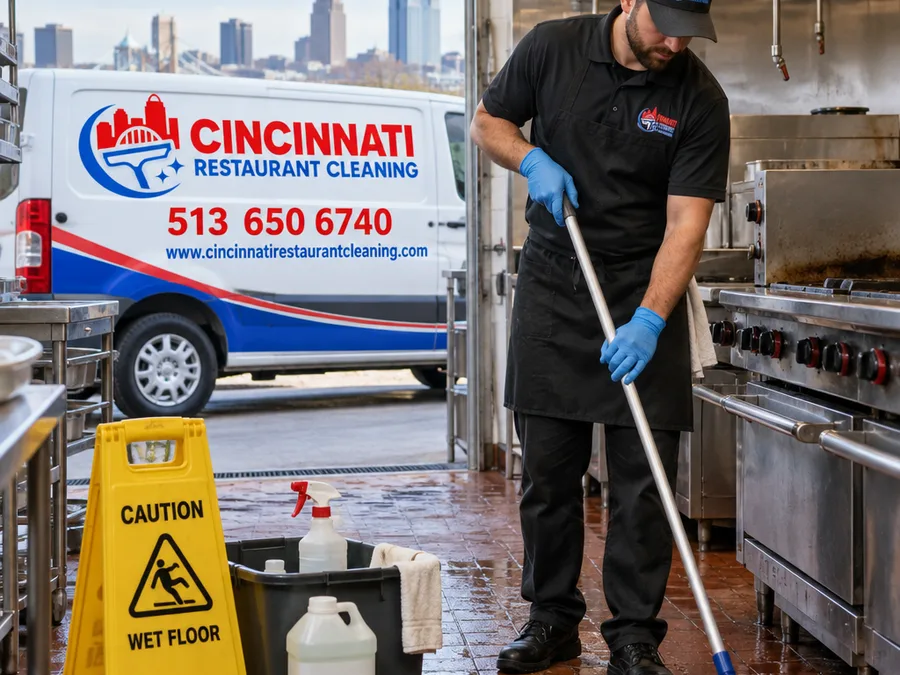
Cincinnati Restaurant Cleaning provides Restaurant Cleaning Newport area operators can schedule around service needs, with clear scope so you know what is included before work begins. If you are coordinating multiple back-of-house cleaning needs, start with professional restaurant cleaning to outline priorities and build a plan that fits your hours and staffing.
Back-of-house equipment cleaning is rarely one-size-fits-all. We build the scope around the equipment you have, how it is used, and what can safely be moved or accessed.
Common items and areas include:
We use commercial-appropriate degreasers and tools suited to stainless and coated surfaces, and we avoid methods that can damage finishes or introduce overspray onto food-contact zones. If a piece of equipment needs power-off, cool-down, or a specific manufacturer-friendly approach, we plan for that during scheduling so there are no surprises mid-shift.
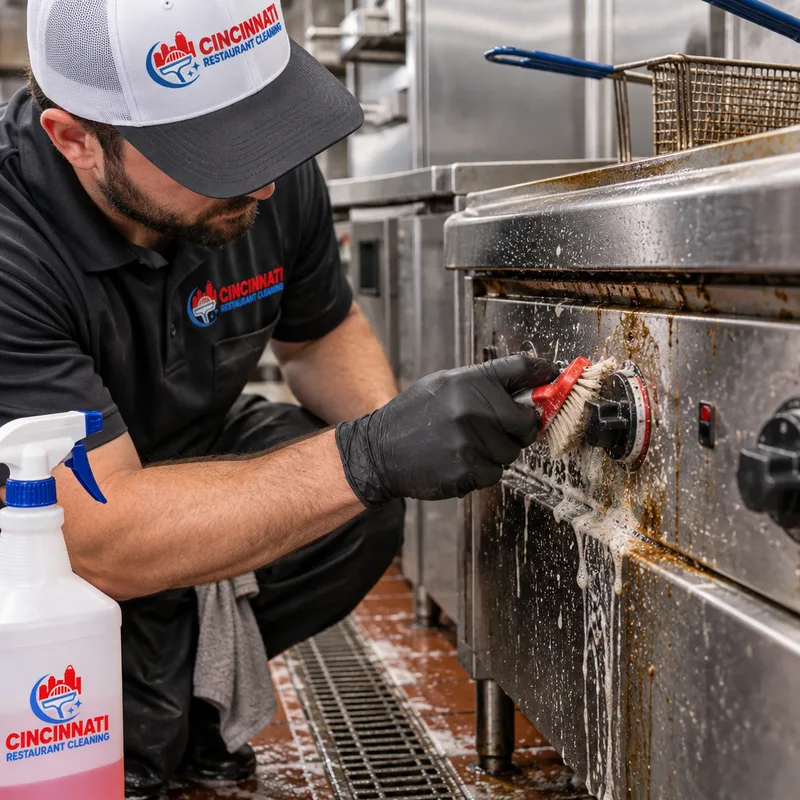
Cook lines, prep zones, and storage areas all soil differently. We define exactly which equipment and surrounding areas are included so you can plan around service.
Edges, seams, gaskets and handles, undersides, kick plates, casters, and floor perimeters are where grime hides and where inspectors often look.
Grease migration from hot equipment can reach floors, walls, and adjacent storage. Targeted degreasing helps keep the whole back-of-house cleaner between visits.
Many equipment cleans are easiest after close or before open. We coordinate access and sequencing so your staff is not working around active cleaning.
Some units can be rolled out; others cannot. We set access expectations up front and focus effort where it will make the biggest difference.
Newport restaurants often run with compact back-of-house footprints, especially near the riverfront and busier corridors where space is at a premium. Tight clearances behind lines and between equipment increase the chances that grease and food soil collect unnoticed, because staff cannot easily reach those areas during daily close.
Timing matters too. When the kitchen is in constant motion, cleaning has to fit the rhythm of service. We commonly plan around cool-down windows for hot equipment, access to floor drains where applicable, and the practical order of operations—for example, detail the upper surfaces and sides first, then address the floor edges and under-equipment areas so you are not re-soiling what was just cleaned.
If you maintain multiple locations or have a seasonal rush, we can build a repeatable scope so every visit hits the same critical points. That consistency is what keeps deep cleans from turning into emergency scrubs right before an inspection.
A defined sequence keeps equipment access, surface protection, degreasing, and the final reset clear from the walkthrough onward.
We review your equipment lineup, access limitations, and priorities—inspection readiness, safety concerns, or chronic buildup zones—then define what will be cleaned and what requires special handling.
We plan for power-off and cool-down where needed, protect nearby areas from splash or overspray, and stage tools and degreasers so the work stays contained.
We break down grease and carbon on exteriors, handles, seams, and edges. For movable units, we clean the exposed sides and the surrounding floor area once pulled out.
We finish with appropriate sanitizing where applicable, wipe down remaining residue, and return the area to operating condition so your team can open or resume service.
Restaurant equipment cleaning in Newport typically ranges from about $250 to $900+ per visit, depending on how many pieces are included and how heavy the grease and carbon buildup is. A smaller scope—for example, a short cook line or a few targeted items—lands on the lower end, while a full back-of-house deep clean with hard-to-access areas trends higher.
Final pricing is driven by equipment count and size, access such as tight clearances or units that cannot be moved, after-hours scheduling, and the condition of the surfaces. The exact cost is confirmed after a walkthrough and a written scope so you know what is included.
Most kitchens benefit from a repeating schedule based on grease load and menu, with heavier fry and sauté lines needing attention more often than light prep areas. A practical approach is to deep clean the highest-soil equipment on a tighter cadence and rotate in lower-soil items on a slower cycle. After the first deep clean, we can recommend a schedule that keeps buildup from returning quickly.
We move equipment when it is designed to be moved—casters, quick disconnects, and safe clearances—and when it can be done without risk to utilities or equipment. If a unit cannot be moved, we focus on reachable sides, the floor edge, and the accessible gap areas, and we document access limits in the scope so expectations are clear.
Yes, after-close or pre-open scheduling is often the best fit for equipment cleaning because hot surfaces need cool-down and the work is more efficient without line traffic. During scheduling, we coordinate access, alarm and entry needs, and the order of work so your opening team is not walking into a half-finished kitchen.
No. Equipment cleaning focuses on the appliances and surrounding back-of-house surfaces you touch and work around daily, while hood and duct cleaning targets the exhaust system. If you are planning both, it helps to schedule them strategically so grease removed from the hood system does not re-soil freshly cleaned equipment.
Before we arrive, it helps to clear small items from equipment tops, label anything that should not be moved, and confirm which units can be powered down. If you have specific inspection concerns, share them in advance so we can prioritize those zones first.
This service is built around back-of-house equipment and the areas directly impacted by grease and food soil. If you also want front-of-house cleaning, floors, restrooms, or a broader janitorial scope, we can coordinate it as part of a larger cleaning plan during the walkthrough.
Tell us what equipment you want addressed and what hours you operate. We will confirm access, build a written scope, and schedule restaurant equipment cleaning that fits the way your kitchen actually runs.